
Interview with Temime Hazal Sahin
EMA continues interviewing experts in their field. For our current issue we have been speaking to Temime Hazal Sahin about her career, experiences, projects, role in EMA.
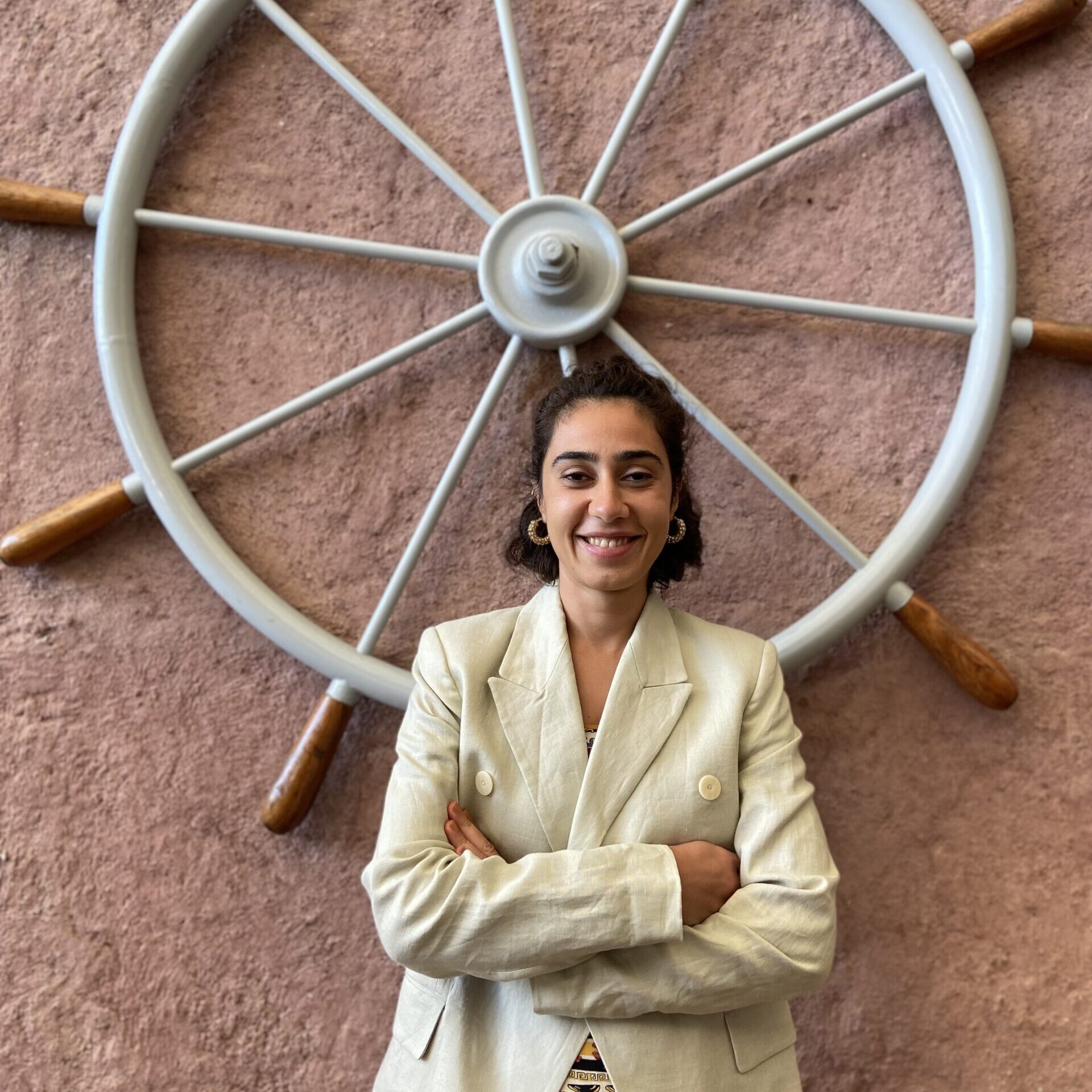
“Working directly with visitors taught me that museums are not simply educational institutions; they are emotional and social spaces. Visitors do not only come to museums to receive information. They also come to feel curiosity, inspiration, nostalgia, creativity, and connection.”
1.You transitioned from an engineering education into the world of museum education and communication. How has your technical background influenced the way you approach structural storytelling or digital management within the cultural sector?
My engineering background has significantly shaped the way I approach communication, organisation, and accessibility within the cultural sector. Engineering taught me to think structurally and analytically, but it also encouraged me to consider how systems can become more efficient, inclusive, and user-oriented. When I later entered the world of museums and cultural communication, I realised that many of these principles could be applied directly to visitor engagement and digital accessibility.
Before focusing specifically on digital communication, I already had a strong interest in how technology could help democratise museums and galleries. I believe digital tools can reduce many of the invisible barriers that exist between institutions and audiences, whether those barriers are geographical, educational, social, or even emotional. Technology allows museums to become more open and approachable spaces.
My technical background also helped me feel more confident working with digital platforms, online communication strategies, visual management systems, and interdisciplinary collaborations. In many ways, engineering gave me the ability to think both creatively and systematically at the same time. Within cultural institutions, this combination is becoming increasingly valuable because museums today are not only spaces of preservation, but also spaces of interaction, participation, and innovation.
2. At the Istanbul Koç Museum, your focus was on the Education Department. How did those “on-the-ground” experiences with museum visitors shape your current approach to digital engagement for the EMA?
My experience within the Education Department at the Rahmi M. Koç Museum gave me a very strong understanding of visitor behaviour and audience communication. RMKM has a highly defined visitor profile, largely consisting of children, families, school groups, and museum members. Because of this, the communication style there was often centred around accessibility, storytelling, comfort, and emotional connection.
Working directly with visitors taught me that museums are not simply educational institutions; they are emotional and social spaces. Visitors do not only come to museums to receive information. They also come to feel curiosity, inspiration, nostalgia, creativity, and connection. This understanding continues to influence the way I approach communication today.
However, the European Museum Academy operates within a very different framework. EMA communicates with a much broader and more specialised international audience composed of museum professionals, researchers, curators, educators, and cultural innovators from across Europe and beyond. Therefore, the communication strategy naturally becomes more multidirectional and conversational.
At RMKM, communication was often more one-directional, where the institution shared knowledge and experiences directly with visitors. In contrast, EMA functions more as an intellectual and collaborative network where ideas circulate between professionals. Through newsletters, interviews, websites, visual storytelling, and special projects, communication becomes a platform for dialogue and exchange.
Projects such as META-MUSEUM, HERITALISE, digital maps, awards programmes, and research initiatives demonstrate how digital engagement can create professional communities that extend beyond physical museum walls. I also believe digital communication can be strengthened through more creative formats such as:
* DIY educational videos
* Short-form collection videos
* Interactive learning projects
* Digital storytelling initiatives
* Behind-the-scenes content from museums and exhibitions
These formats not only promote museums, but also help audiences feel personally connected to cultural heritage and museum work.
3. The European Museum Academy (EMA) is a hub for innovation. In your role supporting communication and newsletters, what do you see as the biggest challenge in keeping a diverse, international community of museum professionals connected and engaged?
One of the greatest challenges is undoubtedly time management and coordination across such an international network. EMA members, collaborators, and specialists are based throughout Europe and often work within very different institutional structures, schedules, and time zones. Coordinating projects, publications, deadlines, and communication across multiple countries can therefore become quite demanding.
At the same time, the cultural sector is deeply driven by passion and commitment. Despite the workload and logistical challenges, what makes EMA unique is that everyone involved genuinely cares about museums, culture, heritage, and education. This shared enthusiasm creates a strong sense of collective purpose.
I also think that maintaining engagement within an international professional network requires more than simply sharing information. People increasingly seek meaningful dialogue, collaboration, and opportunities for participation. Communication today must therefore become more interactive, flexible, and community-oriented.
Newsletters, interviews, visual campaigns, online events, and collaborative projects are no longer simply promotional tools. They are spaces where museum professionals can exchange ideas, discuss challenges, and discover new perspectives. In many ways, digital communication within EMA functions as a cultural meeting point where professionals from different countries and disciplines can still feel connected through a shared language of art, culture, and museums.
4. The museum sector is increasingly seeking individuals who can bridge the gap between STEM (Science, Technology, Engineering, and Mathematics) and the arts. Do you believe your dual perspective as an engineer and an educator is becoming the “new standard” for modern museum professionals, and why?
I believe we are already witnessing a major transformation within museums through the growing concept of “STEAM”, which combines Science, Technology, Engineering, Arts, and Mathematics. This approach recognises that creativity and analytical thinking should not exist separately, but rather support one another.
Because of this shift, the traditional division between STEM disciplines and the arts is gradually disappearing. Museums today are becoming interdisciplinary environments where visitors are encouraged to think creatively, emotionally, technologically, and critically at the same time.
STEAM-based approaches can create inclusive environments for children, families, adults, and visitors with different educational or social backgrounds. They allow audiences to connect art, science, emotion, everyday life, and innovation in much more personal ways.
I also believe this transformation is changing the role of museum professionals themselves. Museum workers today are expected to be more versatile, collaborative, and adaptive than ever before. Communication, education, technology, curatorial practice, and visitor engagement increasingly overlap with one another.
In this sense, having both technical and educational perspectives can be extremely valuable. It allows professionals to understand not only how systems function, but also how people emotionally and socially interact with those systems. Museums are no longer silent spaces where information is simply displayed. They are participatory environments where visitors actively shape experiences and meanings.
Most importantly, STEAM approaches can help museums become more welcoming for people who may traditionally feel disconnected from cultural institutions. Digital and interdisciplinary applications can make museums feel less intimidating and more familiar, helping wider audiences feel that culture belongs to them as well.
5. In your work with newsletters and social media for the EMA, how do you view the role of digital communication in democratising museum knowledge? In your opinion, how can museums better use digital platforms to reach audiences who may never have the opportunity to visit a gallery in person?
First of all, it has been a great pleasure and honour for me to work as a Communications and Special Projects Assistant at the European Museum Academy, and I am very grateful to Emek and Henrik for giving me this opportunity. Working within such an international and intellectually open environment has allowed me to better understand the importance of communication within the cultural sector.
I strongly believe that digital communication plays a crucial role in democratising museum knowledge. Museums have historically sometimes been perceived as exclusive or inaccessible institutions. Digital platforms, however, can help dismantle these perceptions by making cultural knowledge more open, interactive, and widely available.
Through newsletters, interviews, online publications, social media, digital archives, and visual storytelling, museums can now reach people who may never physically visit a gallery or museum space. This is particularly important for audiences who face geographical, economic, educational, or social barriers.
My experience contributing to the EMA Summer School also reinforced this perspective. Working within an international educational environment alongside museum professionals, researchers, and emerging cultural practitioners showed me how valuable collaborative learning spaces can be. As part of my expert role within the Summer School, I observed how digital communication tools could support dialogue beyond the physical classroom and encourage interdisciplinary exchange between participants from different countries and professional backgrounds.
The Summer School demonstrated that museum education today is no longer limited to exhibition spaces alone. Learning can continue through online discussions, digital workshops, collaborative projects, and international communication networks. These experiences made me realise even more strongly that digital platforms are not simply promotional tools, but educational and community-building spaces capable of connecting professionals and audiences globally.
Digital platforms also allow museums to create more human and emotionally engaging forms of communication. Audiences today increasingly seek authenticity, participation, and emotional connection rather than purely institutional authority. Digital communication can therefore transform museums from distant institutions into living cultural communities.
Of course, physical objects and in-person experiences remain deeply important. Standing in front of an artwork or historical object creates a unique emotional and sensory connection that digital media cannot fully replace. However, digitalisation can strengthen and extend these emotional connections by creating new pathways between objects, stories, memories, and audiences.
When visitors begin to emotionally recognise themselves within museums, the invisible walls between institutions and the public begin to disappear. Museums then stop feeling like isolated cultural authorities and instead become shared spaces of belonging, dialogue, creativity, and collective memory. In many ways, this is one of the most powerful possibilities of digital communication today.